

Intelligent Surface Vehicles for Environmental Monitoring & Hydrographic Applications
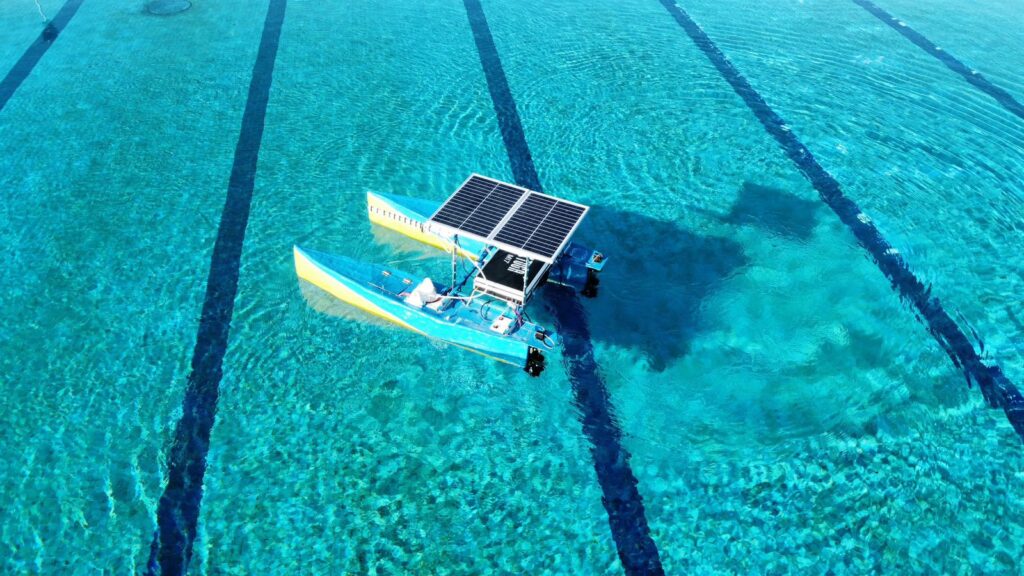
At MEC SOLUTIONS, we are expanding our engineering expertise into autonomous marine robotics through the development and experimental validation of unmanned surface vehicles (USVs).
Our work combines marine robotic platforms, nonlinear control, autonomous navigation, embedded systems, and sensor integration to support the development of intelligent solutions for aquatic environments.
Building on doctoral research and ongoing technological development at the MIST Lab, Polytechnique Montréal, we aim to bridge scientific research and practical engineering applications, with a particular focus on bathymetric surveying, environmental monitoring, and autonomous data acquisition.
Our USV Platform
Catamaran-Based Autonomous Surface Vehicle
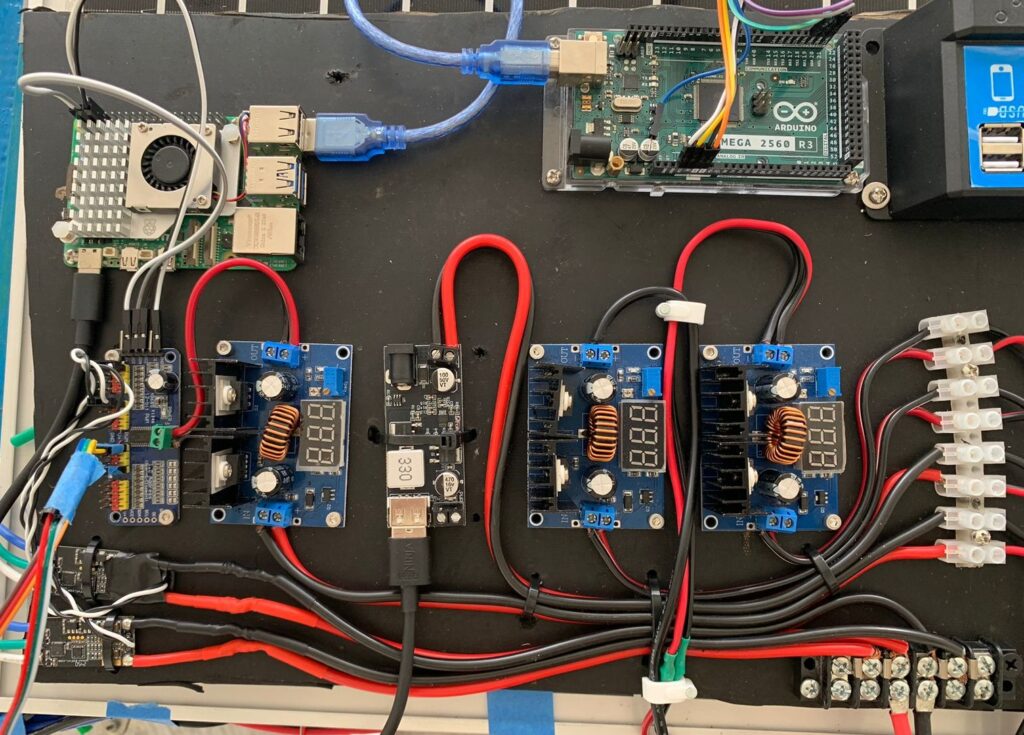
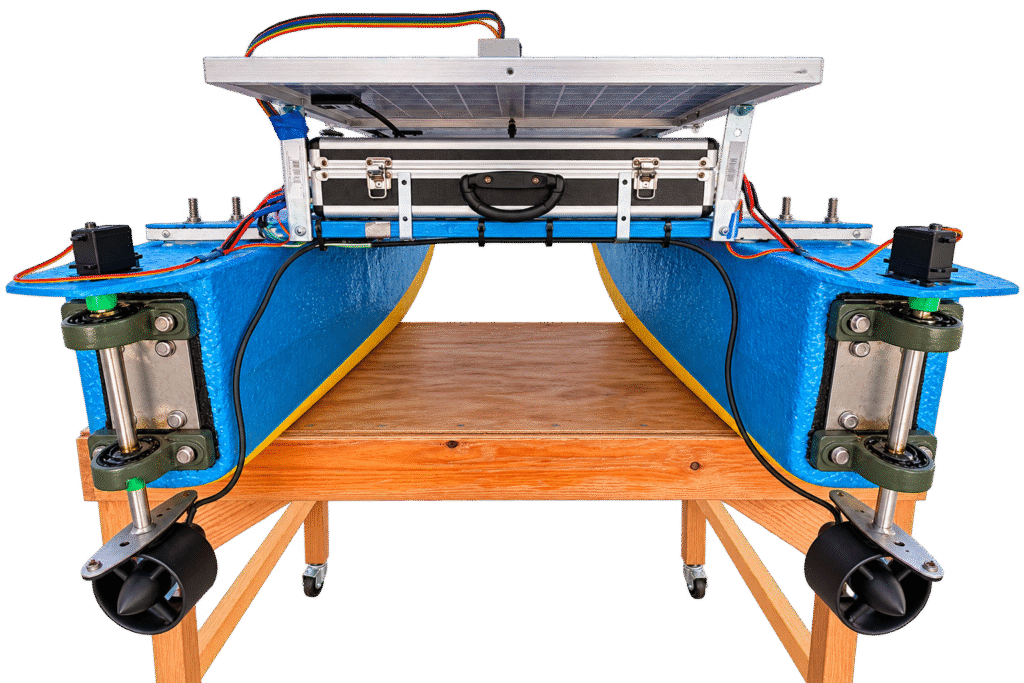
Our custom-built unmanned surface vehicle features a twin-hull configuration designed to provide stability, maneuverability, and flexibility for experimental operations.
The platform integrates two independently steerable thrusters, onboard electronics, power management systems, and a modular structure developed to accommodate different hardware configurations.
From mechanical assembly to electronic integration and propulsion system implementation, the platform represents a complete engineering development process, providing a functional foundation for autonomous marine robotics research.
System Architecture
Integrated Navigation, Control and Embedded Systems
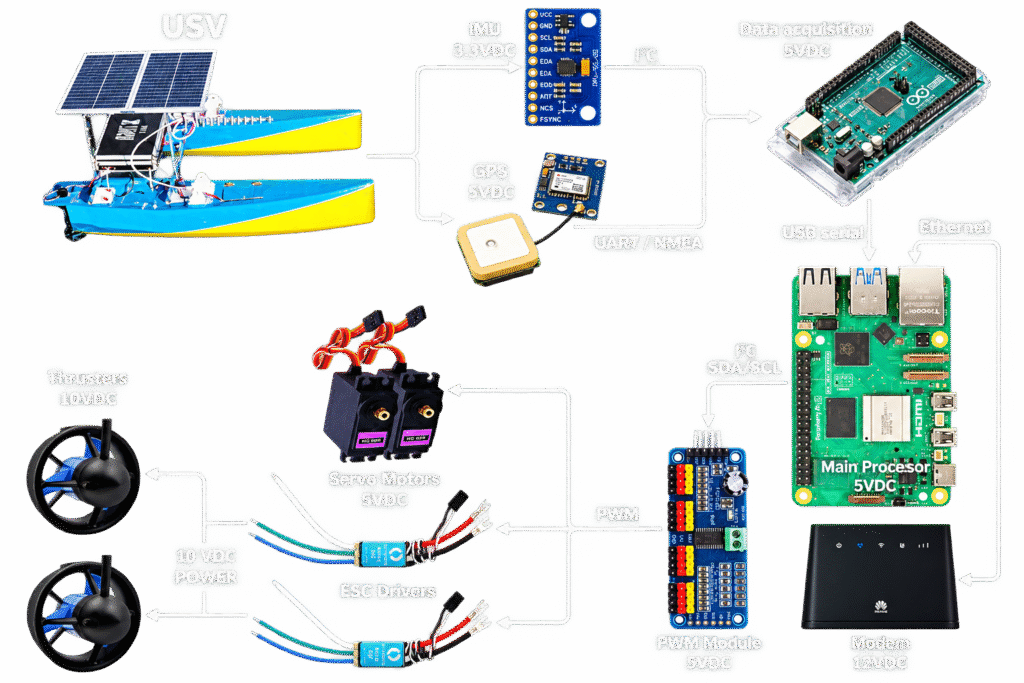
The USV integrates sensing, onboard processing, propulsion actuation, and wireless communication within a modular embedded architecture.
Sensor data is processed by the onboard control system, which executes the guidance and control logic required for autonomous operation and platform actuation.
Its modular design also facilitates future upgrades in sensing, computing, and intelligent perception capabilities.
Experimental Validation
Real-World Testing & Autonomous Navigation Performance
The USV has undergone experimental testing in an Olympic-sized swimming pool to evaluate its navigation capabilities, trajectory tracking, and control performance under real operating conditions.
These trials include the implementation and evaluation of Line-of-Sight (LOS) guidance combined with PID and robust Super-Twisting control strategies, demonstrating the practical integration of theoretical control methods into a functional robotic platform.
The experimental results provide a foundation for further technological development and future deployment in more complex aquatic environments.
Potential Applications
Connecting Robotics, Engineering and Environmental Sciences
Our autonomous marine robotics initiative is envisioned as a multidisciplinary platform connecting engineering, robotics, artificial intelligence, and environmental sciences.
Beyond autonomous navigation, the platform offers opportunities for integrating specialized sensors, developing advanced control strategies, and exploring intelligent perception and environmental mapping technologies.
Our vision is to foster collaboration with research institutions, environmental scientists, engineering teams, and technology partners to develop innovative solutions for scientific exploration, environmental assessment, and real-world challenges.

Research & Industry Collaboration
Bridging Scientific Research, Engineering and Technological Innovation
At MEC SOLUTIONS, we believe that meaningful technological innovation emerges through collaboration between scientific disciplines, engineering expertise, and industry.
We welcome opportunities to collaborate with universities, research laboratories, environmental organizations, technology developers, and industry partners on multidisciplinary projects involving autonomous systems, applied research, and experimental engineering.
Our goal is to establish strategic partnerships that facilitate knowledge exchange, technology transfer, joint research initiatives, and the transformation of scientific developments into practical solutions with real-world impact.